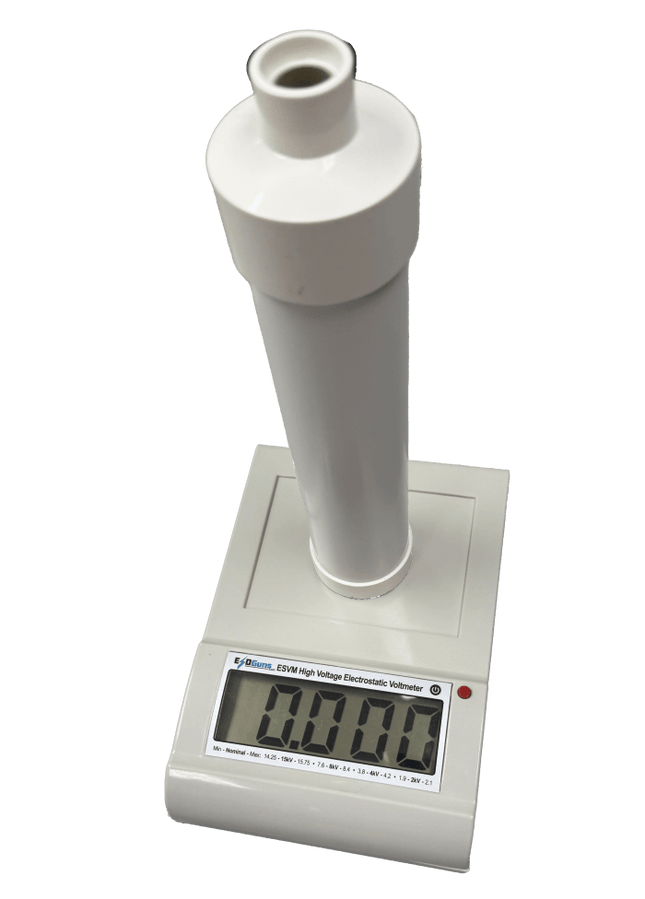
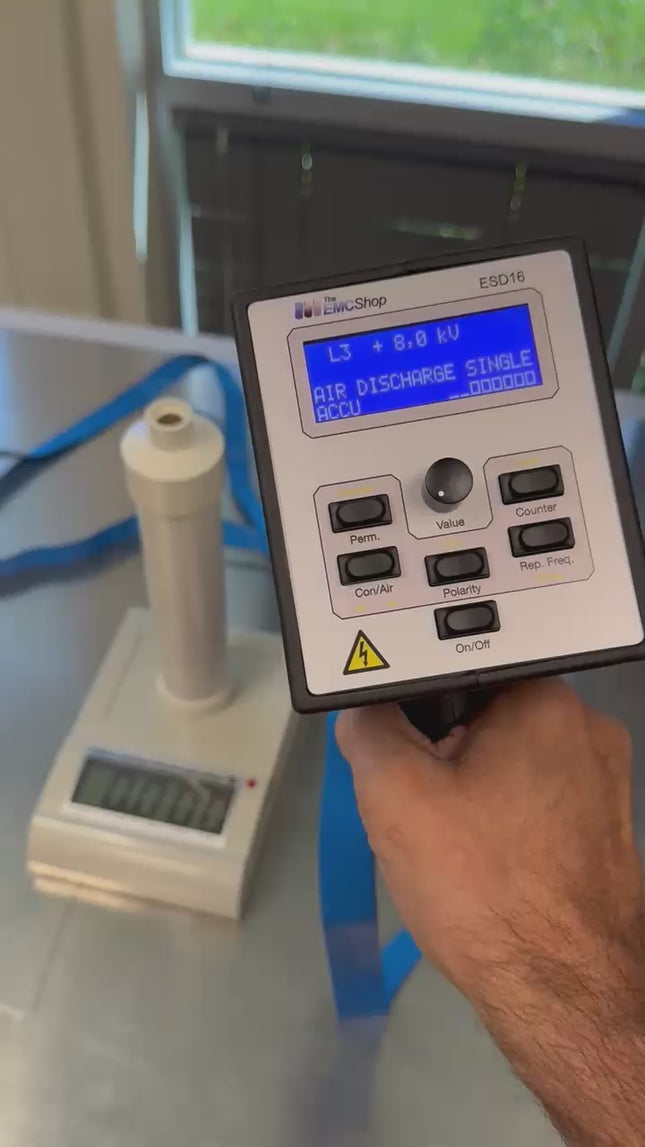
ESD30 30kV ESD Simulator (150pF/330Ohm)

    Description

    ESD30 ESD Simulator Includes Everything for Testing:

    • ESD30 Handheld, battery operated ESD simulator
    • Battery charger/AC Adapter
    • Air discharge tip
    • Contact discharge
    • Ground cable 1 meter
    • Manual
    • Calibration Certificate

    ESD30 30kV ESD Simulator (150pF/330Ohm)

    The ESD30 30kV ESD Simulator is suitable for performing EMI tests on systems in accordance with the standard IEC / EN 61000-4-2 , MIL-STD-461G CS118, RTCA/DO-160 Section 25, IEC 60601-1-2 and many other ESD test standards. Higher test levels can be set far beyond the standard limits. Depending on the test object and test setup, two test methods are to be used:

    1. Air Discharge 
      In this case, the pulse is triggered by approaching the ESD16 towards the DUT. The high voltage applied to the discharge electrode is discharged suddenly, resulting in a very broadband highfrequency interference spectrum. This in turn can lead to influences on the test specimens.

    2. Contact Discharge 
      With this method, the probe of the generator is placed directly on the test object. The actual "impulse triggering" takes place via a relay contact and reduces the influencing factors such as approach speed, amplitude height, air humidity and temperature.
      Important: In the case of non-contacting (eg painted or oxidized surface), the impulses are not triggered. The display shows "No contact". This ensures that when triggering a discharge actually takes place.

    The contact discharge is the preferred test method since it is most reproducible. Air discharges are used when contact discharges are not possible - e.g. at plastic housings. The test voltages defined for each test method are shown in the table below:

    ESD30 Features

    • Programmable discharge voltage 200V to 30kV
    • Stabilized charging voltage
    • Pre-programmed IEC/EN 61000-4-2 test settings
    • True air-discharge breakdown voltage
    • Compact and lightweight design

    ESDguns.com is now a division of The EMC Shop


    Product form

    $795.00 + Shipping

    Free pickup in our shop(s)

      Description of image
        Accessory Kit

      • Carrying Case Includes (7 Lb's):
      • ESD16 Handheld, battery operated ESD simulator
      • Battery charger/AC Adapter
      • Air discharge tip
      • Contact discharge
      • Ground cable 1 meter
      • Manual
      • Calibration Certificate
      • 10% off Calibration Service for Life of the Unit

        Downloads
        Features

      • Programmable discharge voltage 200V to 30kV
      • Stabilized charging voltage
      • Pre-programmed IEC/EN 61000-4-2 test settings
      • True air-discharge breakdown voltage
      • Compact and lightweight design

      Ask & Learn

      Previous answers and questions posted below

      Learn by asking questions, practicing, and getting guidance

      Ask Now

      Accessories & Related Products

      Description

      ESD30 ESD Simulator Includes Everything for Testing:

      • ESD30 Handheld, battery operated ESD simulator
      • Battery charger/AC Adapter
      • Air discharge tip
      • Contact discharge
      • Ground cable 1 meter
      • Manual
      • Calibration Certificate

      ESD30 30kV ESD Simulator (150pF/330Ohm)

      The ESD30 30kV ESD Simulator is suitable for performing EMI tests on systems in accordance with the standard IEC / EN 61000-4-2 , MIL-STD-461G CS118, RTCA/DO-160 Section 25, IEC 60601-1-2 and many other ESD test standards. Higher test levels can be set far beyond the standard limits. Depending on the test object and test setup, two test methods are to be used:

      1. Air Discharge 
        In this case, the pulse is triggered by approaching the ESD16 towards the DUT. The high voltage applied to the discharge electrode is discharged suddenly, resulting in a very broadband highfrequency interference spectrum. This in turn can lead to influences on the test specimens.

      2. Contact Discharge 
        With this method, the probe of the generator is placed directly on the test object. The actual "impulse triggering" takes place via a relay contact and reduces the influencing factors such as approach speed, amplitude height, air humidity and temperature.
        Important: In the case of non-contacting (eg painted or oxidized surface), the impulses are not triggered. The display shows "No contact". This ensures that when triggering a discharge actually takes place.

      The contact discharge is the preferred test method since it is most reproducible. Air discharges are used when contact discharges are not possible - e.g. at plastic housings. The test voltages defined for each test method are shown in the table below:

      ESD30 Features

      • Programmable discharge voltage 200V to 30kV
      • Stabilized charging voltage
      • Pre-programmed IEC/EN 61000-4-2 test settings
      • True air-discharge breakdown voltage
      • Compact and lightweight design

      ESDguns.com is now a division of The EMC Shop


      Recently viewed products

        Login

        Forgot your password?

        Don't have an account yet?
        Create account